AI readiness for the first workflow

Stop guessing before your first AI build costs real money.

AI Flight Plan maps one important workflow, the data it depends on, the decisions people make inside it, and where AI can safely help before you build.

It is the readiness step for businesses that want practical AI, but do not want to force automation into work that is not ready.
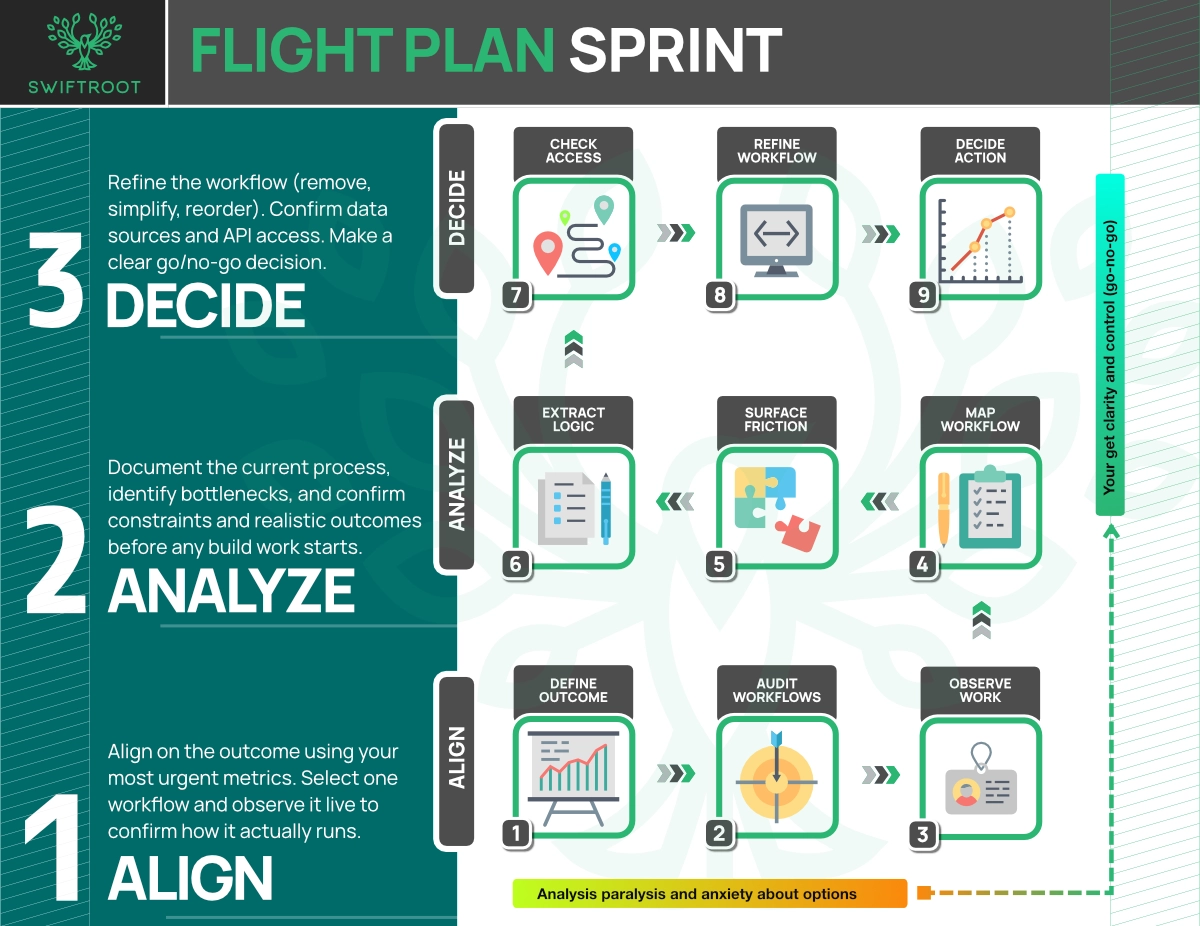
Expose readiness gaps Find unclear handoffs, scattered data, weak review rules, and hidden risk before the build.
Protect the AI budget Avoid paying for vague automation, loose prompts, or a tool your team cannot safely use.
Define the first workflow Leave with one practical AI path instead of a giant transformation plan.
AI Flight Plan sprint map showing align, analyze, and decide steps before a go or no-go implementation decision

Where this fits

You want AI, but the first move is still unclear.

The pressure to adopt AI is real. The hard part is knowing which workflow is ready, what data it needs, what people still need to review, and what should never be automated.

  • The AI idea sounds promising, but the workflow is not clear enough yet.
  • Different people explain the process, data, and decision rules in different ways.
  • Your team has scattered records, documents, notes, tools, and tribal knowledge.
  • Leadership wants progress, but nobody wants a risky science project.
  • You need a practical first AI workflow, not another generic strategy document.

The readiness step

Decide what should be built before anyone starts building.

We narrow the work to one important business process, then map the people, systems, data, decisions, exceptions, and AI fit.

Workflow reality

What actually happens, who touches it, where work waits, and where exceptions show up.

Data and decisions

Which records, documents, rules, approvals, and judgment calls the workflow depends on.

AI role

Where AI can research, summarize, compare, draft, recommend, or stay out of the way.

Good fit

Use Flight Plan when AI implementation would still be guesswork.

The point is not to slow things down. The point is to stop expensive momentum in the wrong direction.

Too many AI ideas The team has possible use cases, but no clear first workflow to build around.
Data is scattered The information needed for a good answer lives across tools, files, inboxes, and people.
Review rules are unclear Nobody has decided what AI can suggest, what humans must approve, and what should be logged.
Exceptions matter The process looks simple until edge cases, client rules, risk, or timing changes the path.
Knowledge lives in one head Key decisions depend on people who know the shortcuts, caveats, and unwritten rules.
Tool pressure is rising The business wants AI now, but choosing a tool before mapping the work feels backwards.

What you leave with

A first AI workflow your team can actually use.

The output is not a shelf report. It is a readiness map and implementation direction for the first workflow where AI can do useful work safely.

01 Workflow readiness map

The process, handoffs, systems, data, exceptions, and review points that matter.

02 AI fit diagnosis

Where AI can help, where it needs human control, and where it should not be used yet.

03 First workflow recommendation

A narrow starting point with a clear problem, role for AI, and useful business outcome.

04 Implementation path

The next build steps, risk notes, data needs, and decisions required to move forward.

Make it visible

Turn the messy process into a buildable plan.

Flight Plan is about understanding the work before automation starts: what connects, what breaks, and what needs to be true for AI to help safely.
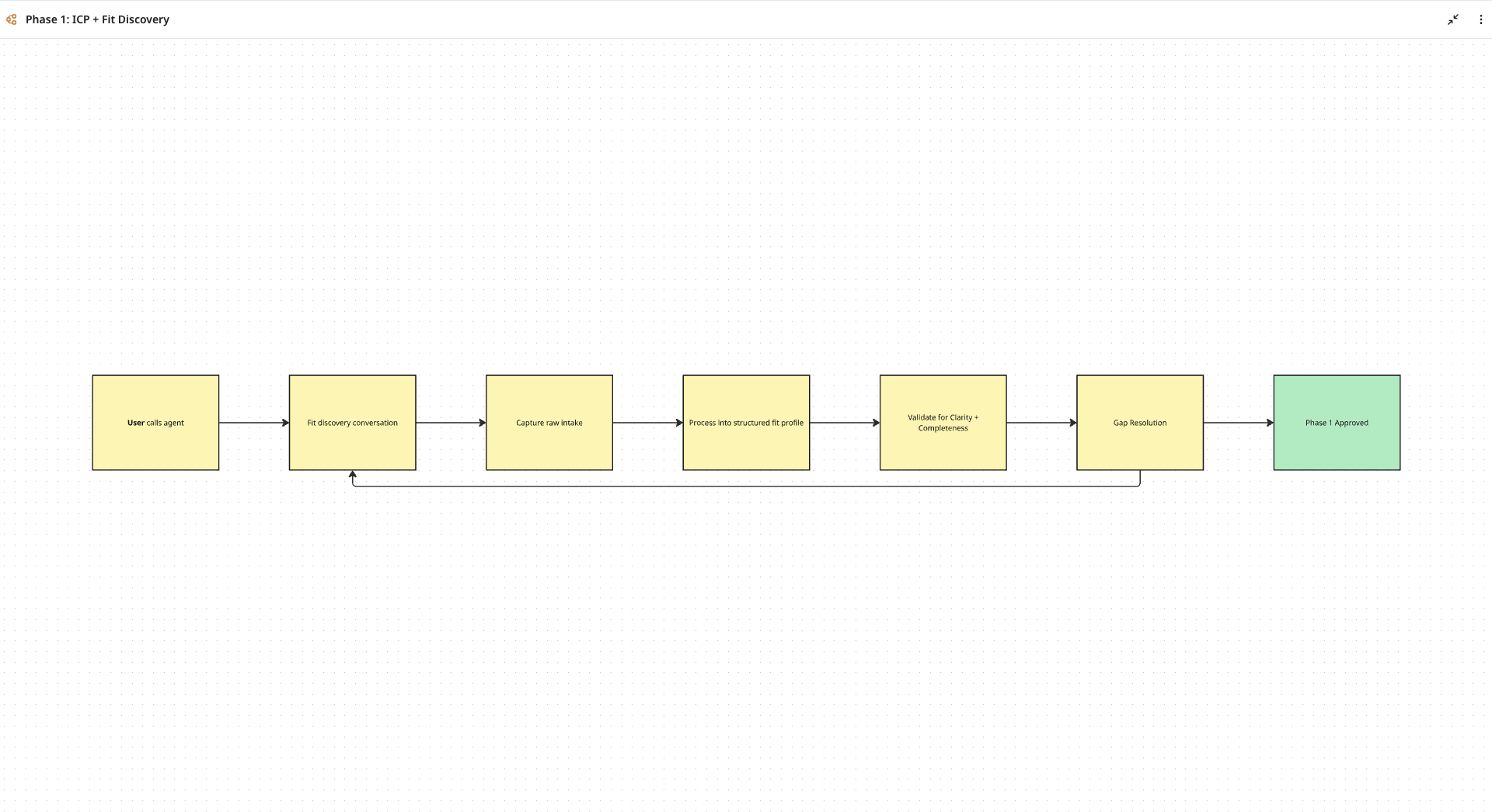
Workflow map showing a phase one discovery path from intake through validation and approval Workflow map showing a phase one discovery path from intake through validation and approval
Workflow map

Map the work before the build starts.

Steps, handoffs, data, waits, review points, and approval loops become clear enough to discuss.
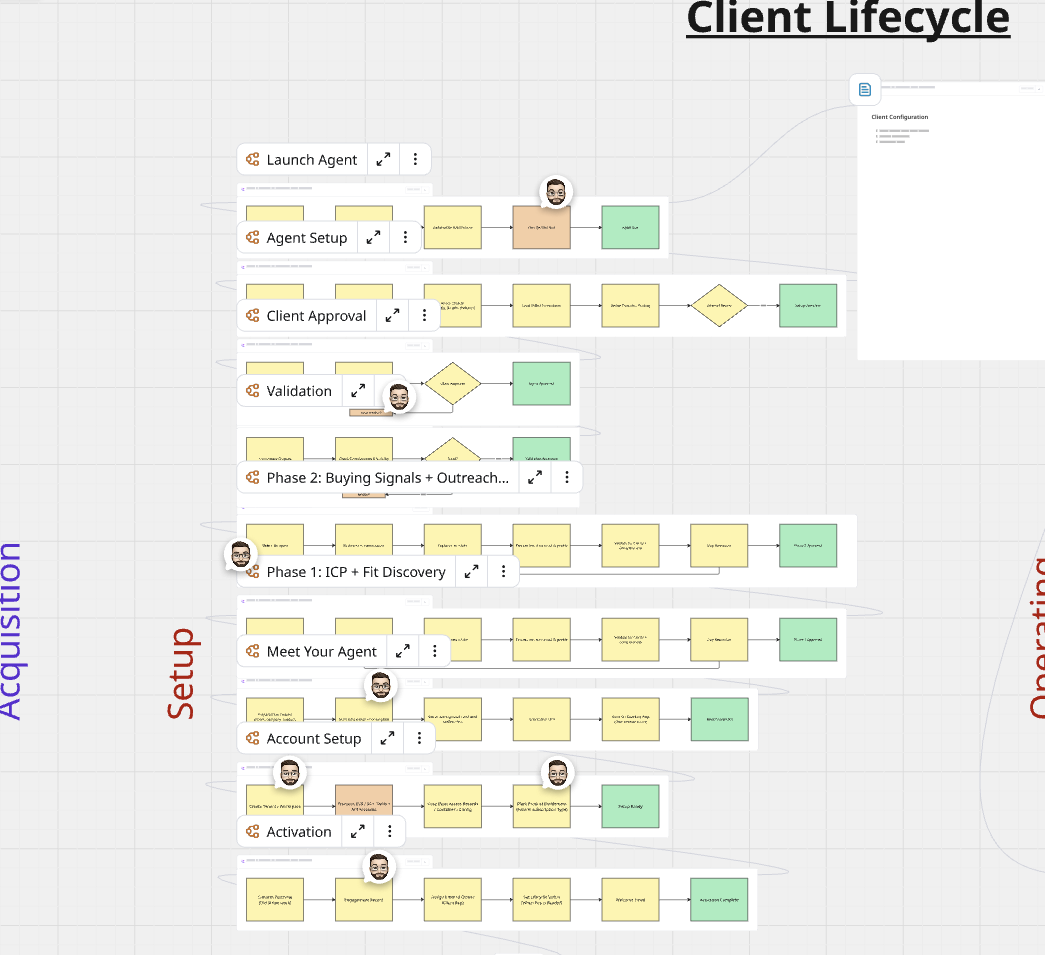
Workflow planning board showing connected client lifecycle phases from setup through operation Workflow planning board showing connected client lifecycle phases from setup through operation
Implementation shape

See the build path in context.

The plan shows where one AI workflow sits in the larger lifecycle, including the approvals and evidence it needs.

How it works

A short, focused path from AI idea to first build.

We keep the scope intentionally narrow: one workflow, practical evidence, clear risks, and a next step your team can act on.

AI Readiness Call Pick the workflow, goals, constraints, people, systems, and risk areas worth inspecting.
Map the Workflow Document how the work moves, what information it needs, and where decisions happen.
Assess AI Fit Separate useful AI jobs from risky automation, unclear data, and missing review rules.
Implementation Readout Review the recommended first workflow, the build path, and what should happen next.

Not a fit when

Some teams are ready to build directly.

If the workflow, data sources, review points, ownership, and implementation path are already clear, Flight Plan may be unnecessary.

The workflow is already defined

You know the steps, inputs, exceptions, approvals, owners, and target outcome.

You only need a build quote

The scope is already written well enough that readiness work would repeat what you know.

You want a giant AI plan

This is built for one practical first workflow, not an all-at-once transformation roadmap.

Get started today

Start with the workflow where AI would matter most.

Book discovery, bring the messy process, and we will help decide whether it is ready for AI, what needs to change, and what the first build should be.

Start discovery