
Product
Pilot
A focused product offer for better account timing, signal review, and sales context.
SwiftRoot product build story
 Sales Scout turns cold outreach into better-timed sales conversations
We built Sales Scout because outbound teams do not need another list. They need a way to notice account movement, understand why it matters, and decide whether there is a credible reason to start a conversation.
Sales Scout was built on the same Mission Control pattern we use for workflow products: clear operating steps, flexible orchestration, reviewable work, and standard procedures that keep AI useful without making it reckless.
Product
Pilot
A focused product offer for better account timing, signal review, and sales context.
Mode
Human-in-loop
AI helps research and organize context; people still review signal quality and decide what happens next.
Inputs
Accounts
The workflow starts from companies the team already cares about, then looks for useful movement.
Outcome
Better timing
Reps get a clearer reason to reach out instead of inventing a generic opener.
The sales problem
The account list was not the hard part. Timing was.
Most outbound systems make it easy to add more names. Sales Scout was built around deciding which accounts deserve attention now.
What we built around
Signal, context, and review had to live together.
The product is not just a signal feed. It includes company context, research requests, activity history, and a review loop.
What changed
Sales work starts from a sharper reason.
The team can move from list activity to account-specific context before a rep interrupts someone.
What had to get solved
Sales Scout had to help a person make a better call: is this account worth attention, why now, and what context should shape the next action?
01
The product needed to separate meaningful account change from generic activity and list noise.
02
A signal alone is too thin. Reps need business context before they can start a credible conversation.
03
The workflow had to support review, tuning, and judgment instead of auto-pushing weak outreach.
04
Imports, enrichments, reviews, failures, and decisions needed to be visible so the system could be trusted.
What we built
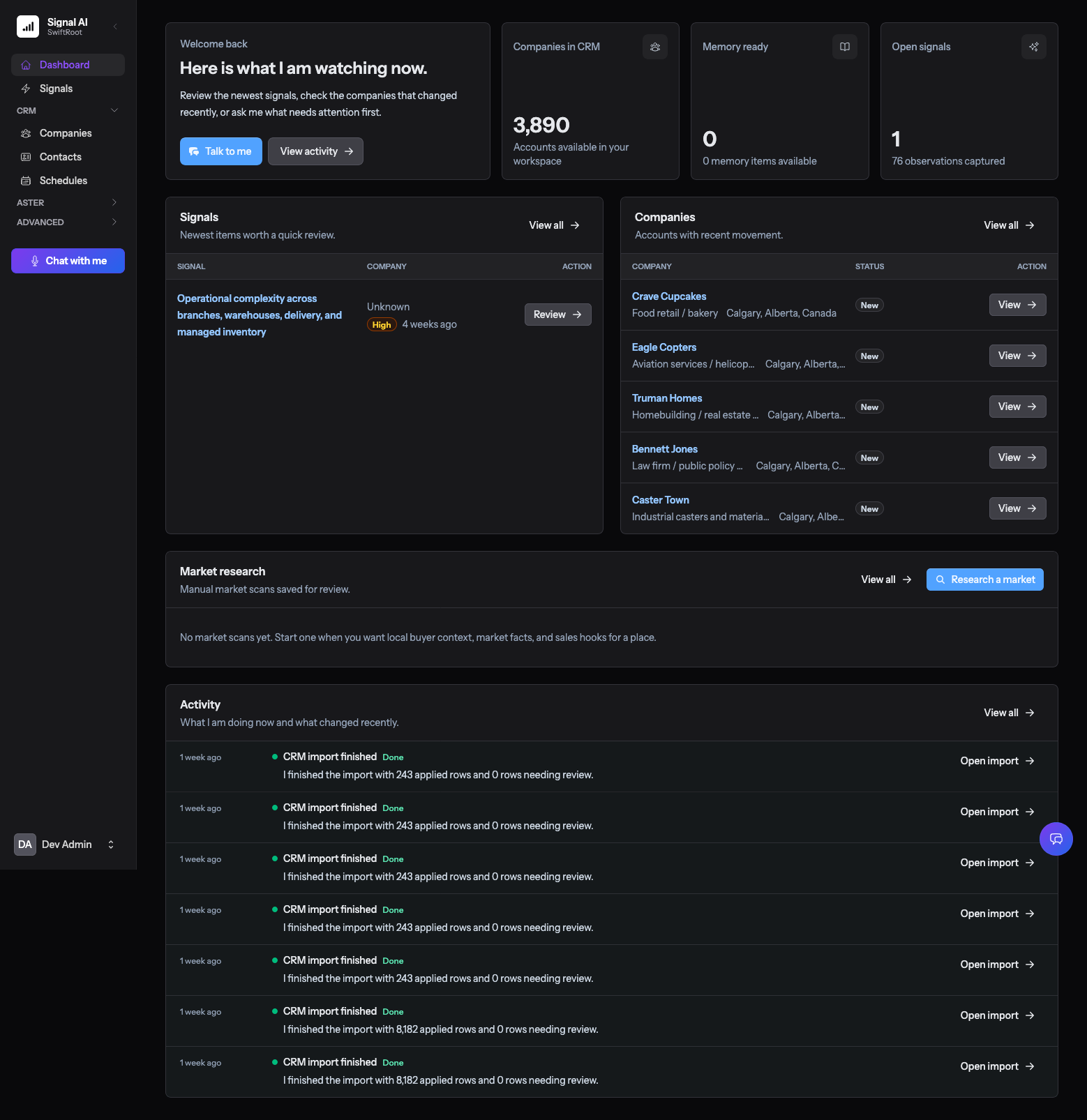
The product combines a dashboard, CRM-style company workspace, enrichment request flow, signal review, and an activity trail so account timing is visible instead of scattered.
Dashboard
A working surface for open signals, account movement, market scans, and recent product activity.
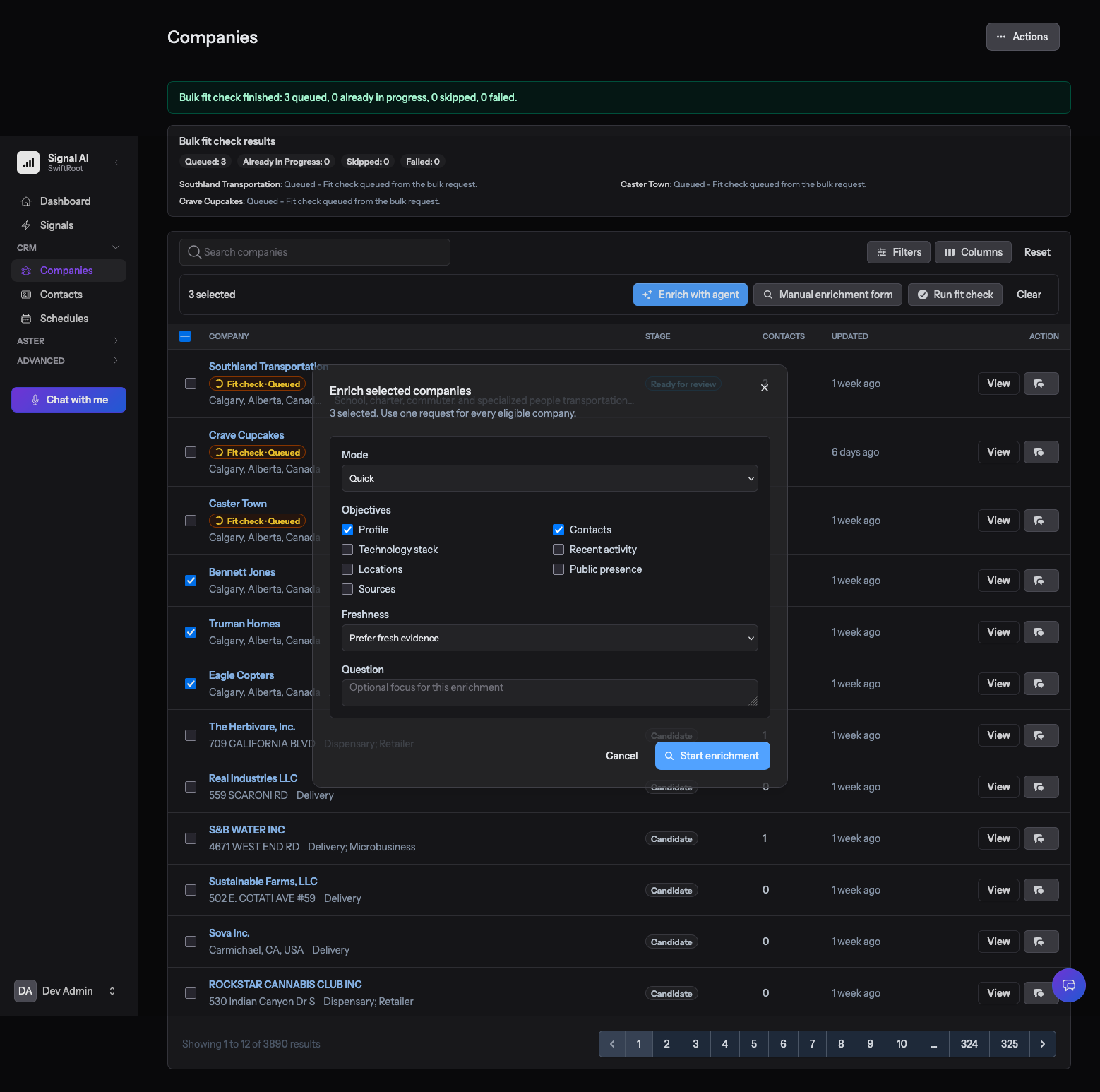
Companies
A company workspace where account status, contacts, fit checks, and enrichment actions are visible.
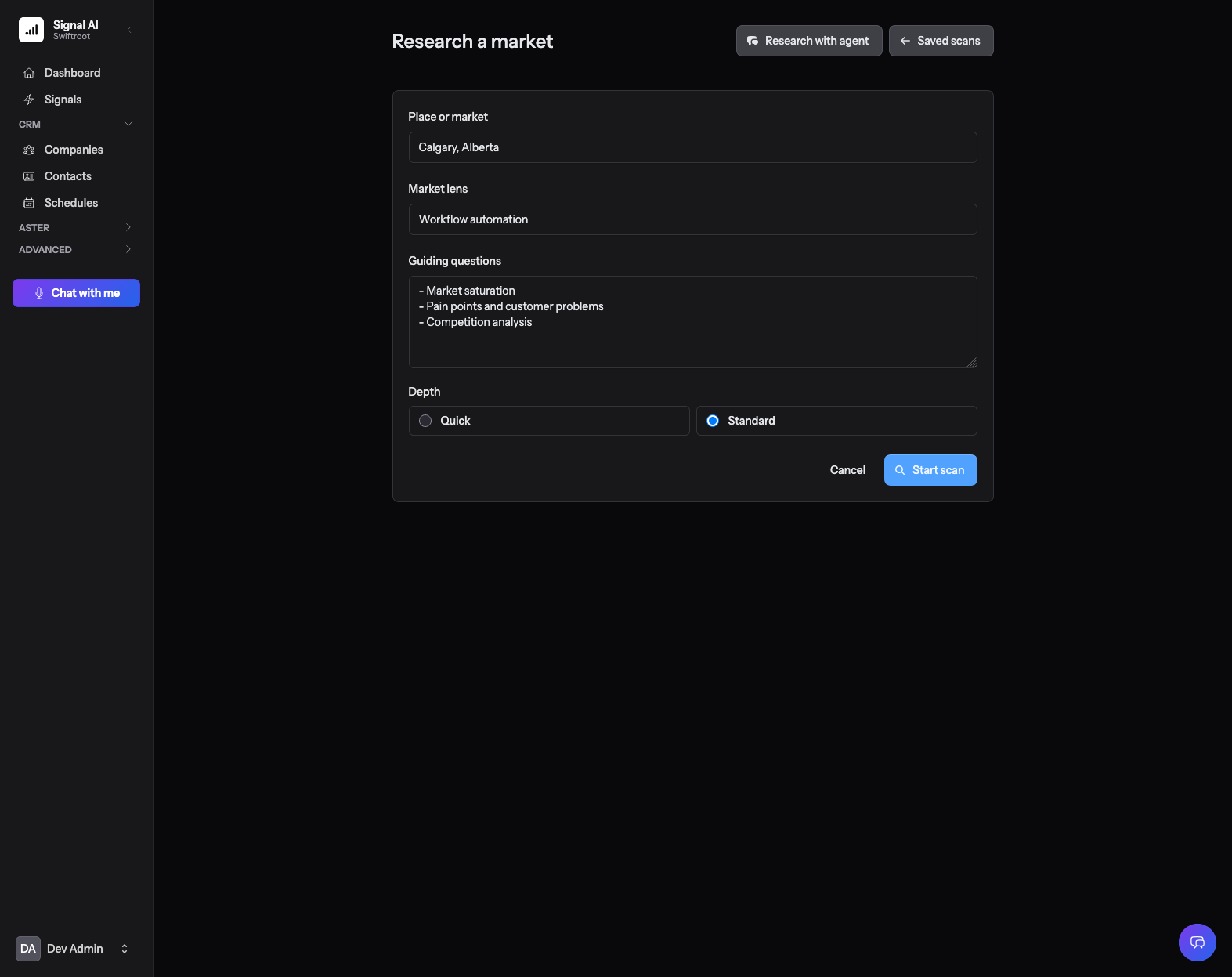
Research requests
Focused enrichment modes for profile, contacts, locations, activity, sources, and public presence.
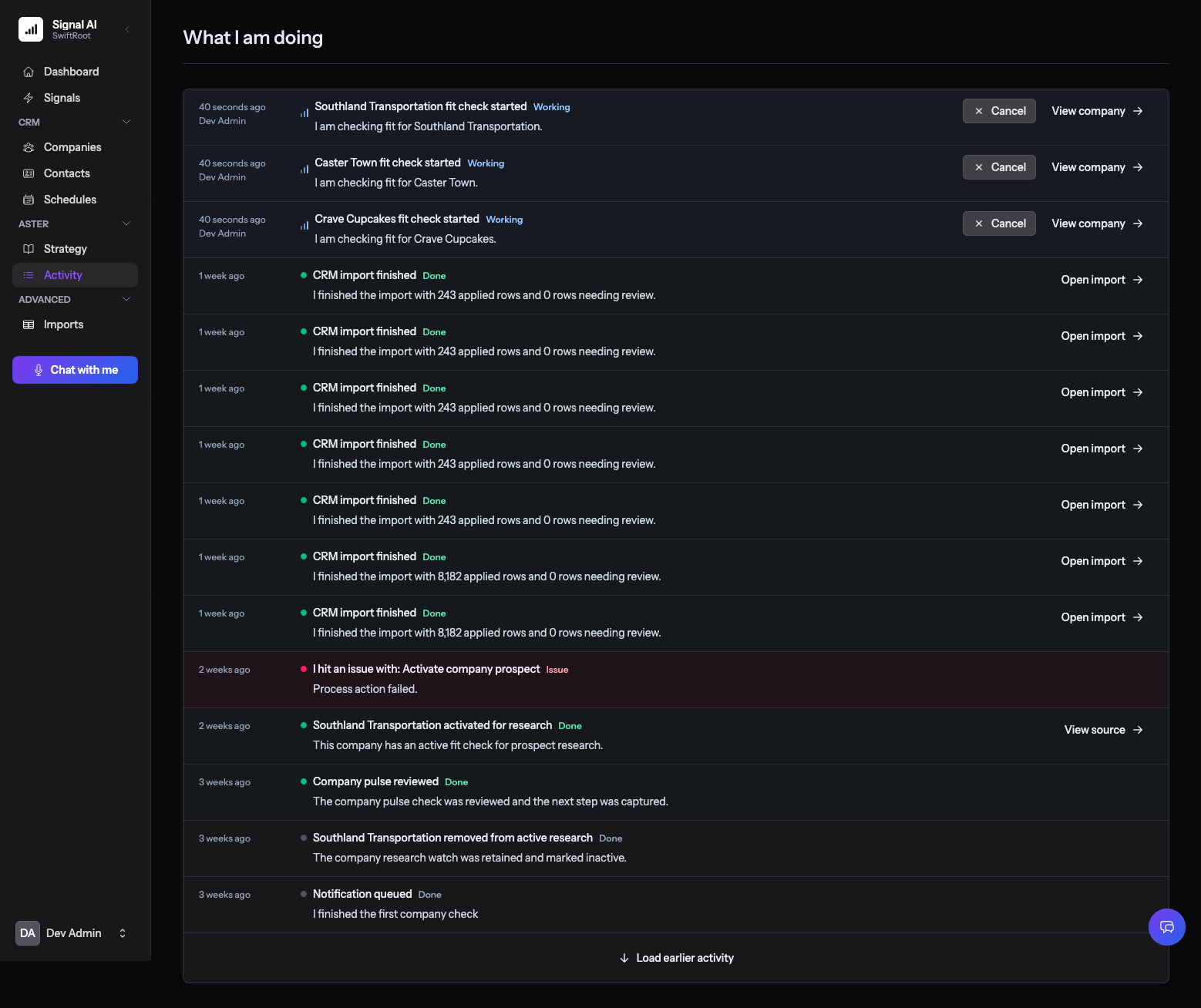
Activity trail
A record of imports, checks, queued work, completions, and exceptions so the team can trust the system.
Product decisions
Sales Scout is intentionally not positioned as an autopilot that manufactures pipeline. The product is stronger when it helps people notice, inspect, and act with context.
Decision 01
The system helps build a better account picture before asking a rep to act.
Decision 02
Imports, enrichments, fit checks, and failures are visible enough for an operator to understand.
Decision 03
The pilot offer stays focused on buyer signal, qualification context, and better-timed sales conversations.
Decision 04
The same operating ideas apply to client workflow builds: visibility, state, review, exceptions, and trust.
The Mission Control foundation
The product works because the workflow is explicit. Account movement, research requests, enrichment steps, review states, activity history, and next actions all have a place to live.
Workflow orchestration
Mission Control-style structure gave Sales Scout room to coordinate imports, research, fit checks, reviews, exceptions, and follow-up actions without hard-coding every step into one brittle screen.
Standard operating procedures
The system is designed around how work should happen: what gets reviewed, what can be queued, what needs human judgment, and what should be recorded before the next action.
Why it matters
That foundation is what makes Sales Scout safer: AI can help with research and context, while the workflow keeps timing, quality, and human approval visible.
Similar workflow opportunity?
Sales Scout is one product expression of a broader SwiftRoot pattern: map the work, expose the state, keep people in control, and use AI where it improves the decision.